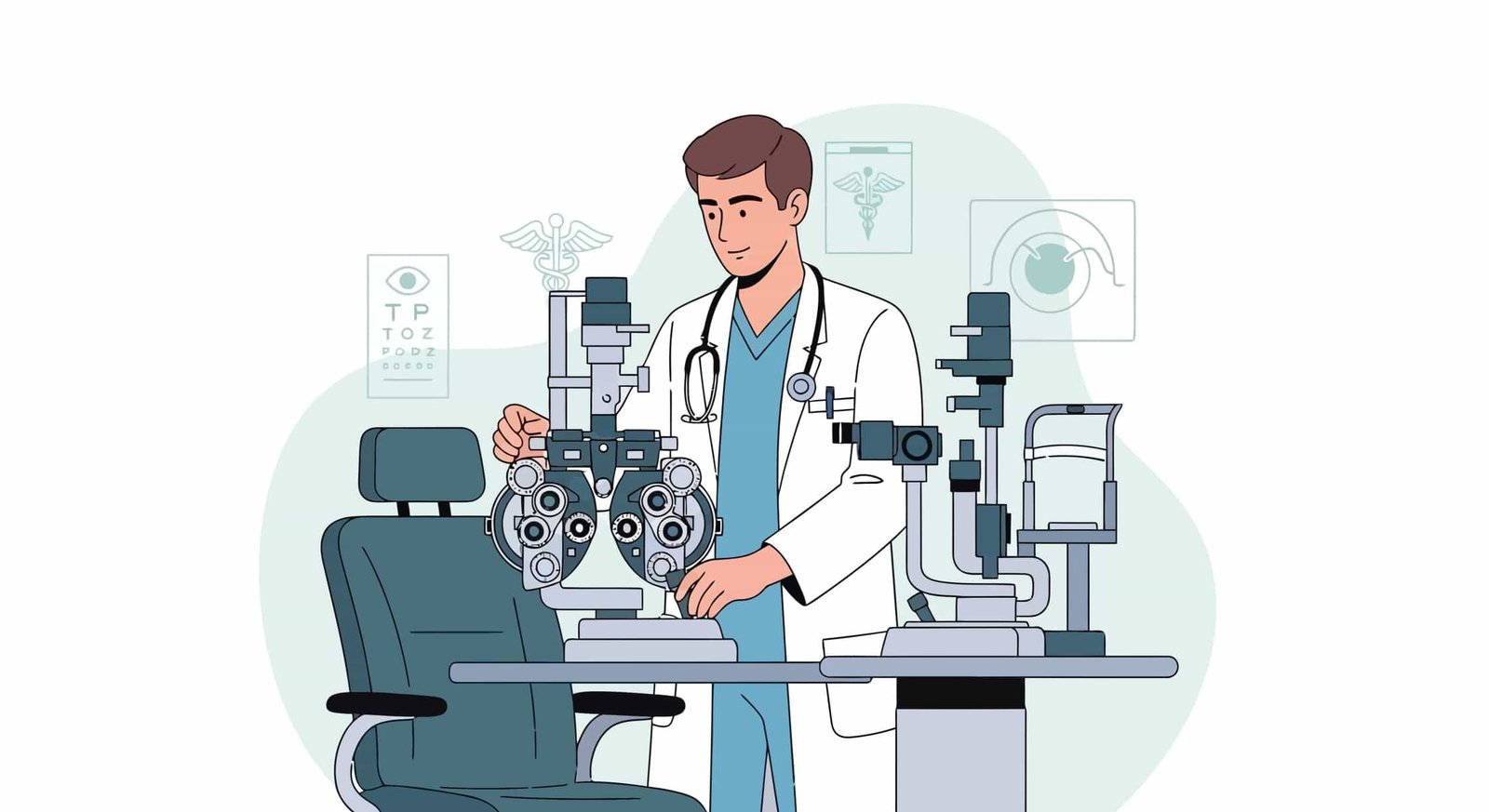
Every successful eye clinic relies on reliable and efficient diagnostic equipment. If you are starting a new optometry clinic, upgrading an ophthalmology practice, expanding into specialty care, or improving workflow in multiple exam lanes, choosing the right diagnostic tools can affect patient outcomes and clinic performance.
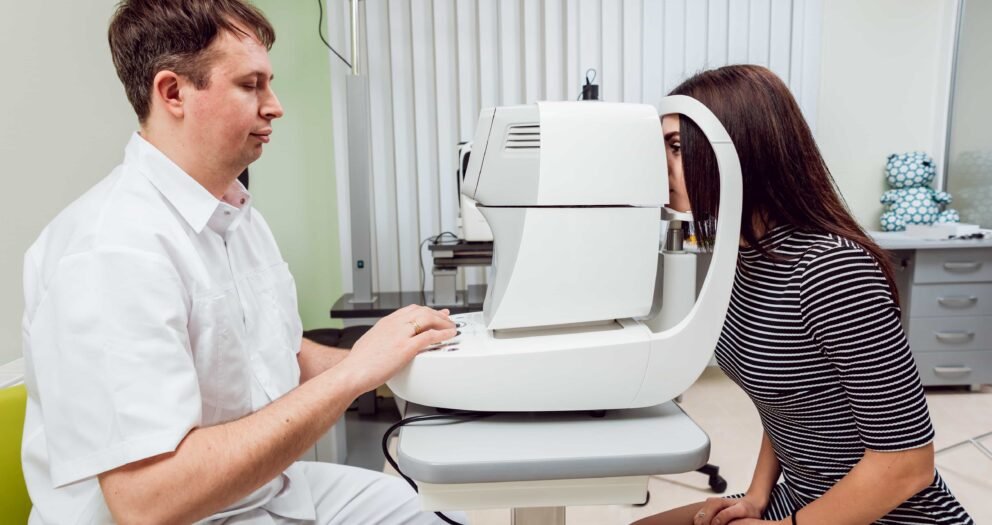
Modern ophthalmic diagnostic equipment supports each stage of the patient journey. This includes initial screenings, routine eye exams, disease monitoring, treatment planning, and surgical preparation. These tools help eye care professionals evaluate visual function, measure eye pressure, assess corneal health, capture retinal images, calculate intraocular lens power, and document changes over time.
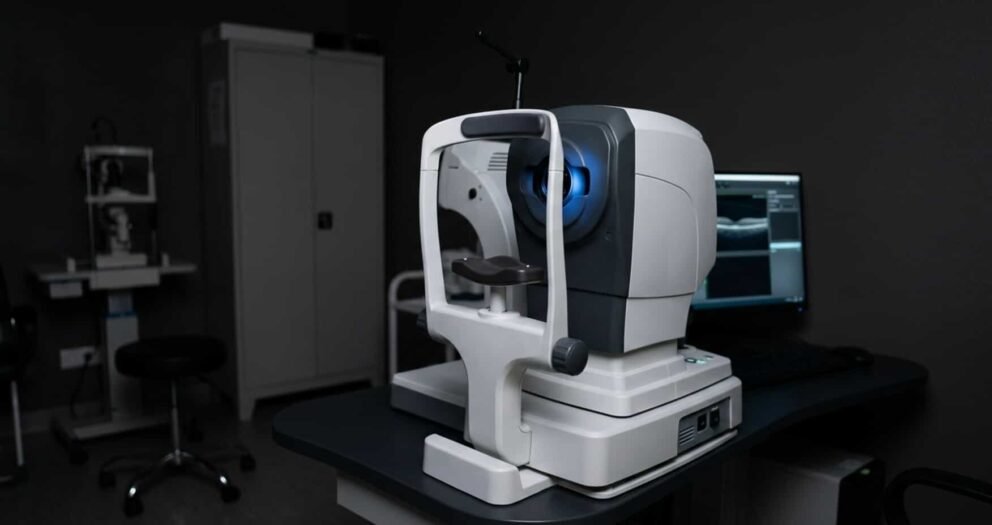
Today’s eye clinics use a variety of ophthalmic equipment. This includes eye exam machines, imaging systems, diagnostic instruments for clinic workflows, and specialized ophthalmology equipment for specialty care.
Buying equipment is one of the largest investments a clinic makes. Because of this, many clinic owners and healthcare buyers opt for used ophthalmic equipment and secondhand diagnostic systems. This allows them to access trusted brands at a lower cost.
Ferris Optical Inc. supplies used and secondhand ophthalmic diagnostic equipment to clinics worldwide. They help ophthalmologists, optometrists, hospitals, and surgical centers create effective diagnostic environments without the high cost of purchasing all-new devices.
Why Ophthalmic Diagnostic Equipment Matters for Eye Clinics
Better Diagnosis and Patient Care
High-quality diagnostic equipment helps eye care providers identify conditions earlier, monitor disease progression more effectively, and make more confident treatment decisions.
Modern ophthalmic diagnostic instruments support evaluation and management of:
- Glaucoma
- Cataracts
- Diabetic retinopathy
- Age-related macular degeneration
- Corneal disease
- Retinal disorders
- Refractive error
- Optic nerve changes
For example, retinal imaging systems can reveal subtle structural changes before symptoms become noticeable, while visual field testing helps establish functional changes over time.
Combining objective measurements with clinical examination improves both diagnostic confidence and patient care.
Faster Clinic Workflow
Clinic efficiency matters just as much as clinical accuracy.
The right-eye clinic equipment streamlines patient flow through pre-testing, examination, imaging, and treatment planning.
Diagnostic devices with automation, fast acquisition speeds, integrated reporting, and technician-friendly operation can help:
- Reduce appointment bottlenecks
- Improve patient throughput
- Standardize testing procedures
- Minimize repeat measurements
- Increase provider efficiency
For growing practices and high-volume clinics, workflow optimization often becomes one of the biggest reasons to upgrade equipment.
Higher Patient Confidence
Patients increasingly expect a modern clinical experience.
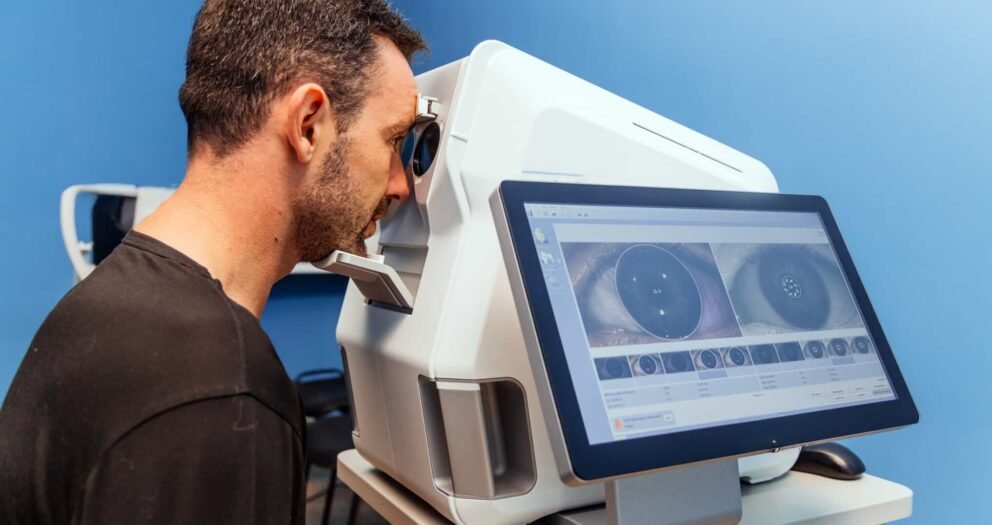
Advanced eye exam machines provide visual reports, imaging, and measurable results that help patients better understand their diagnosis and treatment recommendations.
Showing a retinal image, OCT scan, or corneal map often creates stronger patient engagement than verbal explanations alone.
This level of transparency can strengthen trust while improving acceptance of recommended follow-up care.
Smarter Equipment Investment
Building a diagnostic lane requires significant investment.
Many practices choose used ophthalmic diagnostic equipment because it allows them to:
- Reduce startup costs
- Equip additional exam rooms
- Expand diagnostic services sooner
- Improve return on investment
- Access premium manufacturers at a lower cost
When properly tested and selected for clinical needs, used ophthalmic equipment can provide excellent value.
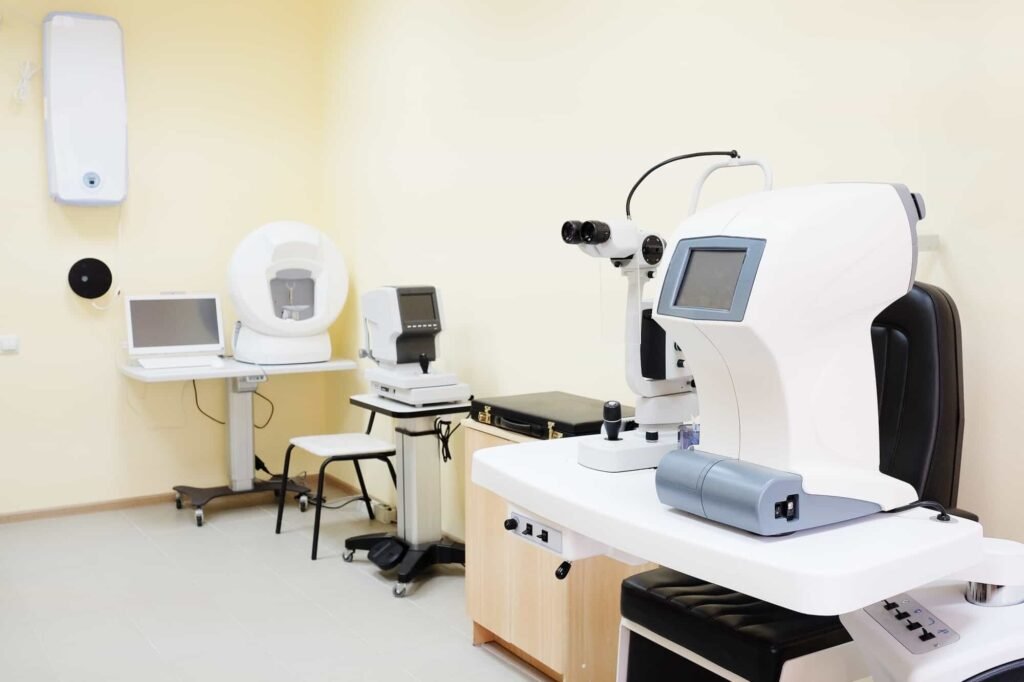
How to Choose the Right Ophthalmic Diagnostic Equipment
Match Equipment to Your Clinic Type
Not every eye clinic requires the same diagnostic setup.
An optometry clinic focused on refraction and routine care will have different priorities from those of a retina specialist or a cataract center.
Examples include:
- General optometry clinics: refraction, tonometry, fundus imaging, routine diagnostics
- Cataract centers: biometry, topography, surgical planning tools
- Retina practices: OCT and advanced retinal imaging
- Glaucoma clinics: tonometry and visual field testing
- Comprehensive ophthalmology clinics: broader diagnostic capabilities
Choose equipment that aligns with your patient population and clinical goals.
Consider Patient Volume
Patient volume should influence equipment decisions from the beginning.
Higher-volume clinics benefit from:
- Faster acquisition speed
- Automated alignment
- Reliable repeatability
- Simple technician workflows
- Reduced training requirements
Equipment that performs well in busy environments can improve scheduling flexibility and reduce staff burden.
Check Software and Data Output
Modern ophthalmology clinic equipment increasingly depends on software performance.
Before purchasing equipment, evaluate:
- Electronic medical record compatibility
- DICOM support where applicable
- Report generation capabilities
- Image export formats
- Cloud or local storage options
- Network integration
- Printer support
Good data management helps clinics improve documentation and long-term patient monitoring.
Think About Space and Workflow
Diagnostic devices should fit naturally into your clinic layout.
Consider:
- Equipment footprint
- Dedicated testing rooms
- Power requirements
- Table compatibility
- Technician movement
- Accessibility needs
A strong workflow design can often improve efficiency as much as purchasing newer equipment.
Compare New vs Used Equipment
New equipment offers access to the latest technology, manufacturer warranty programs, and direct support.
However, used ophthalmic diagnostic equipment often offers outstanding value for clinics seeking to maximize purchasing power.
Well-maintained used systems can help clinics:
- Expand services sooner
- Access premium brands
- Lower capital expenses
- Reach profitability faster
The best decision depends on workflow requirements, available budget, and growth plans.
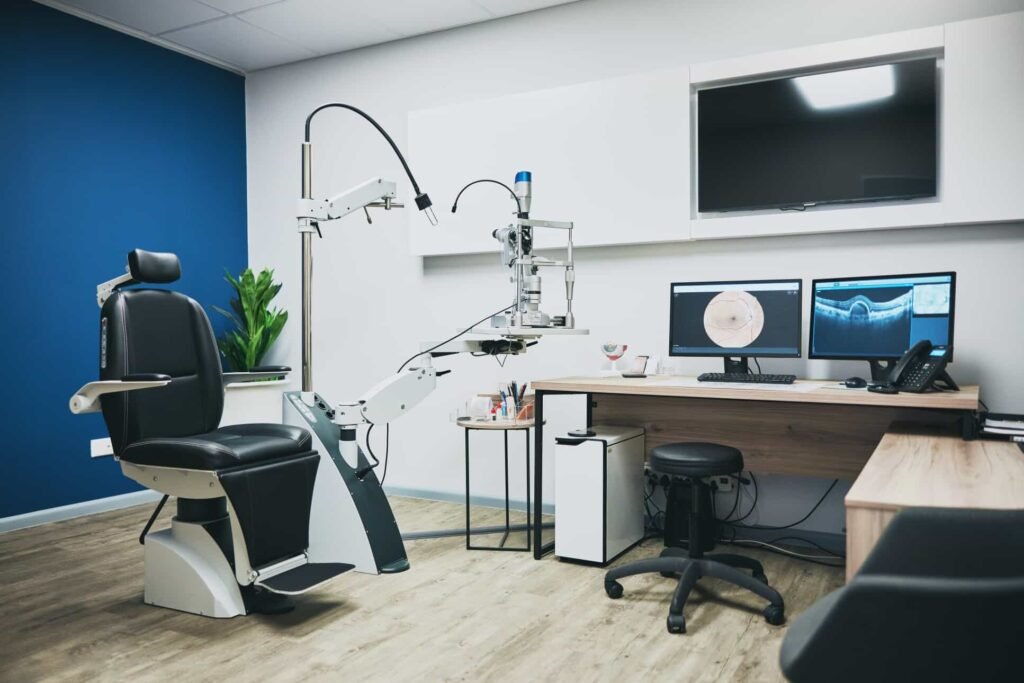
Top 10 Ophthalmic Diagnostic Equipment Every Eye Clinic Needs
1. Optical Coherence Tomography System (OCT)
Optical Coherence Tomography, commonly called OCT, has become one of the most valuable diagnostic technologies in modern eye care.
OCT produces high-resolution cross-sectional imaging of retinal layers, the optic nerve, the macula, and in some systems, the anterior segment.
Because OCT provides detailed structural information, it supports diagnosis, monitoring, and treatment planning across multiple specialties.
Best For:
- Ophthalmology clinics
- Optometry clinics
- Retina practices
- Glaucoma screening
- Advanced diagnostic imaging workflows
Common Models and Brands:
- ZEISS CIRRUS HD-OCT 4000
- ZEISS CIRRUS HD-OCT 5000
- ZEISS CIRRUS HD-OCT 6000
- Topcon 3D OCT-2000
- Topcon Maestro2
- Heidelberg SPECTRALIS
- Optovue OCT systems
- Nidek OCT platforms
Buying Notes:
When evaluating OCT systems, consider:
- Image quality
- Scan speed
- Retina and glaucoma software
- OCT angiography capability if needed
- Data export features
- Included workstation
- Serviceability and support
For many clinics, OCT remains one of the strongest investments for expanding diagnostic capability.
2. Optical Biometer
Optical biometers play a central role in cataract planning and in optimizing refractive outcomes.
These systems measure key ocular dimensions used for intraocular lens calculations and surgical planning.
Optical biometers typically support:
- Axial length measurement
- Keratometry
- IOL power calculation
- Surgical planning
- Refractive outcome prediction
Best For:
- Cataract clinics
- Ophthalmology practices
- Surgical centers
- Research institutions
- High-volume cataract workflows
Common Models and Brands:
- ZEISS IOLMaster 700
- ZEISS IOLMaster 500
- Alcon ARGOS Biometer with Image Guidance
- Haag-Streit LENSTAR LS-900
- Topcon Aladdin
- Nidek AL-Scan
- Oculus Pentacam
- Tomey OA-2000
- Heidelberg Anterion
- Ziemer Galilei G-6
- Optopol REVO NX
Best Optical Biometry Devices by Use Case:
High-volume cataract practices:
- ZEISS IOLMaster 700
- Alcon ARGOS
Premium IOL and refractive cataract planning:
- ZEISS IOLMaster 700
- ARGOS
- Pentacam AXL
- Galilei G-6
Research and academic environments:
- LENSTAR LS-900
- Heidelberg Anterion
- IOLMaster 700
Growth-oriented clinics:
- Topcon Aladdin
- Nidek AL-Scan
- Tomey OA-2000
Buying Notes:
Availability, approval status, software configuration, formulas, and accessories may vary by region and individual used-equipment listing.
3. Digital Fundus Camera
A digital fundus camera captures images of the retina, optic disc, macula, and retinal vasculature.
These systems support both documentation and clinical screening while creating visual records patients can understand.
Best For:
- Optometry clinics
- Ophthalmology clinics
- Retina practices
- Diabetic screening programs
- Primary eye care
Common Models and Brands:
- Canon CR-2 Plus AF
- Topcon fundus cameras
- Nidek AFC systems
- ZEISS VISUCAM
- Optos Daytona
- Optos California
- iCare DRSplus
Buying Notes:
Evaluate:
- Field of view
- Non-mydriatic functionality
- Image quality
- Software capabilities
- DICOM compatibility
- Widefield imaging requirements
Digital imaging continues to become one of the most valuable tools for patient education and long-term monitoring.
4. Non-Contact Tonometer
A non-contact tonometer measures intraocular pressure (IOP) without touching the cornea, making it fast, comfortable, and ideal for high-volume screening workflows. It is a key piece of ophthalmic diagnostic equipment used in both optometry and ophthalmology settings.
Best For
- Optometry clinics
- glaucoma screening
- general eye exams, and
- busy pre-test lanes.
Common Models and Brands to Mention
NIDEK NT-1P, NIDEK NT-530, Keeler Pulsair IntelliPuff, Tomey FT-1000, Canon TX-20P, Topcon tonometry systems.
Buying Notes
Look for auto-alignment, soft air-puff technology, optional pachymetry integration, a built-in printer, robust data export capabilities, and consistent IOP measurement accuracy.
5. Slit Lamp
A slit lamp is one of the most essential instruments in any eye clinic and a foundational part of ophthalmic diagnostic equipment. It allows detailed examination of the anterior segment, including the cornea, conjunctiva, iris, and lens.
Best For
Every optometry and ophthalmology clinic.
Common Models and Brands to Mention
Haag-Streit BQ 900, Topcon slit lamps, Takagi slit lamps, NIDEK slit lamps, Inami, Nikon, Keeler, CSO.
Buying Notes
Focus on optical quality, illumination system, magnification range, imaging/camera compatibility, table integration, and durability.
6. Auto-Refractor / Keratometer
Auto-refractors and keratometers measure refractive error and corneal curvature, making them essential ophthalmic diagnostic equipment for refraction workflows and contact lens fitting.
Best For
Optometry clinics, optical shops, ophthalmology practices, and high-volume pre-test rooms.
Common Models and Brands to Mention
NIDEK ARK series, Topcon KR series, Canon autorefractors, Huvitz systems, Tomey autorefractors, Potec systems.
Buying Notes
Consider measurement speed, keratometry functionality, pupil size range, ease of use, printer integration, and EMR connectivity.
7. Corneal Topographer / Tomographer
Corneal topographers and tomographers analyze corneal shape and structure in detail. They are essential ophthalmic diagnostic equipment for contact lens fitting, keratoconus detection, and surgical planning.
Best For
Optometry clinics, refractive surgery centers, cataract clinics, corneal specialists, and contact lens-focused practices.
Common Models and Brands to Mention
Oculus Pentacam, Topcon Aladdin, Tomey TMS systems, NIDEK OPD systems, CSO topographers, Ziemer Galilei G-6.
Buying Notes
Look for anterior/posterior corneal data, pachymetry maps, keratoconus screening tools, cataract planning features, and strong reporting output.
8. Visual Field Analyzer / Perimeter
A visual field analyzer measures peripheral vision and is essential for diagnosing and monitoring glaucoma and neurological conditions.
Best For
Glaucoma clinics, ophthalmology practices, optometry clinics, neuro-ophthalmology, and general eye care.
Common Models and Brands to Mention
ZEISS Humphrey Field Analyzer HFA 3, Humphrey 740i/750i, Haag-Streit Octopus 600/900, Topcon perimeters, Medmont systems.
Buying Notes
Look for reliable test strategies, patient comfort, normative databases, print/export capability, and software support.
9. Lensmeter
A lensmeter measures eyeglass prescriptions and is essential for optical verification workflows.
Best For
Optometry clinics, optical stores, ophthalmology practices with optical departments.
Common Models and Brands to Mention
NIDEK lensmeters, Topcon lensmeters, Huvitz lensmeters, Reichert lensmeters, Tomey lensmeters.
Buying Notes
Look for auto-lens detection, progressive-lens support, prism measurement, UV testing, and an easy-to-read display.
10. Ophthalmic Ultrasound / A-Scan and B-Scan
Ophthalmic ultrasound is used when optical imaging is limited, such as in the presence of dense cataracts. A-scan measures axial length and B-scan provides posterior segment imaging.
Best For
Ophthalmology clinics, cataract practices, retina specialists, and surgical centers.
Common Models and Brands to Mention
Alcon OcuScan, Sonomed Escalon systems, Quantel Medical ultrasound, NIDEK ultrasound systems, Tomey ultrasound systems.
Buying Notes
Evaluate probe quality, image resolution, software features, measurement modes, portability, and workflow integration.
Quick Comparison: Top 10 Ophthalmic Diagnostic Equipment
- OCT System
Retinal and optic nerve imaging
Best for: Retina, glaucoma, optometry
Brands: ZEISS CIRRUS, Topcon OCT, Heidelberg SPECTRALIS
Value: High - Optical Biometer
IOL calculations for cataract surgery
Best for: Cataract clinics
Brands: ZEISS IOLMaster, ARGOS, LENSTAR
Value: High - Fundus Camera
Retinal photography and documentation
Best for: Diabetic screening and general retinal exams
Brands: Canon, Topcon, Optos, ZEISS
Value: High - Non-Contact Tonometer
Intraocular pressure (IOP) measurement
Best for: Optometry and glaucoma screening
Brands: NIDEK, Canon, Tomey, Keeler
Value: High - Slit Lamp
Anterior segment eye examination
Best for: Every eye clinic
Brands: Haag-Streit, Topcon, Takagi
Value: Essential - Auto-Refractor / Keratometer
Refraction and corneal curvature measurement
Best for: Optometry clinics
Brands: NIDEK, Topcon, Canon, Huvitz
Value: High - Corneal Topographer
Corneal mapping and analysis
Best for: Contact lens and refractive clinics
Brands: Oculus, Topcon, Tomey, CSO
Value: High - Visual Field Analyzer
Peripheral vision and glaucoma testing
Best for: Glaucoma clinics
Brands: ZEISS HFA, Haag-Streit Octopus
Value: High - Lensmeter
Eyeglass prescription verification
Best for: Optical shops and optometry clinics
Brands: NIDEK, Topcon, Huvitz
Value: Practical - A/B Scan Ultrasound
Axial length measurement and posterior imaging
Best for: Cataract and retina clinics
Brands: Alcon OcuScan, Sonomed
Value: High
Best Equipment Package by Clinic Type
New Optometry Clinic Setup
Recommended ophthalmic diagnostic equipment:
- Auto-refractor / keratometer
- Slit lamp
- Non-contact tonometer
- Lensmeter
- Fundus camera
- Visual field analyzer
- OCT system (if budget allows)
Ophthalmology Clinic Setup
Recommended ophthalmic diagnostic equipment:
- OCT
- Slit lamp
- Tonometer
- Fundus camera
- Visual field analyzer
- Optical biometer
- A/B scan ultrasound
- Corneal topographer
Cataract Clinic Setup
Recommended ophthalmic diagnostic equipment:
- Optical biometer
- Corneal topographer/tomographer
- Slit lamp
- A-scan / B-scan ultrasound
- Specular microscope (as needed)
- Fundus camera or OCT
Retina / Glaucoma Practice Setup
Recommended ophthalmic diagnostic equipment:
- OCT system
- Fundus camera or widefield imaging
- Visual field analyzer
- Tonometer
- Slit lamp
- B-scan ultrasound (if needed)
New vs Used Ophthalmic Diagnostic Equipment
Benefits of Buying New
New ophthalmic diagnostic equipment offers the latest technology, warranty coverage, software updates, and OEM support.
Benefits of Buying Used
Used equipment lowers startup costs, improves ROI, and makes premium brands more accessible.
When Used Equipment Makes Sense
Used ophthalmic diagnostic equipment is ideal when properly tested, serviced, and matched to clinic workflow needs.
What to Check Before Buying Used Equipment
- Model and manufacturer
- Year or generation
- Functional condition
- Software version
- Included accessories
- Computer/workstation condition
- Printer and data output
- Calibration/testing status
- Service history
- Power requirements
- Shipping and installation needs
- Replacement parts availability
Why Buy Ophthalmic Diagnostic Equipment from Ferris Optical Inc.?
Choosing the right ophthalmic diagnostic equipment is one of the most important investments a clinic can make. The quality of your diagnostic tools directly affects patient outcomes, workflow efficiency, and long-term practice growth. For many clinics, especially startups and growing practices, finding a balance between clinical quality and budget constraints can be challenging. Ferris Optical Inc. helps bridge that gap by providing reliable, professionally inspected used equipment from trusted global manufacturers. Whether you are building a new clinic, upgrading outdated systems, or expanding into new specialties, access to affordable, high-quality diagnostic technology can significantly improve both clinical performance and financial sustainability.
Used Ophthalmic Equipment for Clinics Worldwide
Ferris Optical Inc. provides used ophthalmic diagnostic equipment to clinics, hospitals, and surgical centers worldwide. Their inventory serves a wide range of practice types, from small optometry offices to busy ophthalmology and surgical centers. Because ophthalmic diagnostic equipment often lasts a long time with proper maintenance, many clinics can obtain top-tier technology at a fraction of the original cost without giving up reliability or clinical precision.
This worldwide availability is especially important for clinics in the early stages of growth or in areas where purchasing new equipment can be too expensive. Ferris Optical helps ensure that practices do not have to compromise their diagnostic capabilities due to budget constraints. Instead, they can create fully functional diagnostic suites that support complete patient care right from the start.
Major Brands at Lower Cost
One of the key advantages of working with Ferris Optical Inc. is access to leading ophthalmic brands at significantly lower prices than new equipment. Their inventory often includes industry-standard systems from ZEISS, Topcon, NIDEK, Canon, Tomey, Haag-Streit, Heidelberg Engineering, Optos, Alcon, Oculus, Keeler, Huvitz, and other respected manufacturers in the ophthalmic space.
These brands are widely used in hospitals and specialty eye care centers worldwide for their precision, durability, and clinical reliability. By offering pre-owned options, Ferris Optical enables clinics to access the same high-end ophthalmic diagnostic equipment used by top-tier institutions—without the financial burden of purchasing brand-new systems.
This cost advantage can be especially impactful when outfitting multiple lanes or building a full diagnostic suite, where equipment expenses can quickly escalate. Clinics can prioritize essential technologies such as OCT, fundus imaging, tonometry, and corneal mapping while staying within a manageable budget.
Practical Support for Clinic Buyers
Beyond equipment supply, Ferris Optical Inc. provides practical, experience-based guidance to help buyers make informed decisions. Selecting ophthalmic diagnostic equipment is not just about brand preference—it requires careful consideration of clinical workflow, patient volume, specialty focus, and long-term maintenance needs.
Ferris Optical works with buyers to understand how the equipment will be used in real clinical environments. For example, a high-volume optometry practice may prioritize rapid screening tools such as non-contact tonometers and autorefractors, while a retina or glaucoma specialty clinic may require advanced imaging systems such as OCT and visual field analyzers.
This consultative approach helps reduce the risk of purchasing mismatched or underutilized equipment. It also ensures that clinics invest in systems that integrate well with their daily operations, support staff efficiency, and enhance diagnostic accuracy. For many buyers, especially first-time clinic owners, this guidance can be just as valuable as the equipment itself.
Build or Upgrade Your Clinic for Less
Outfitting a clinic with modern ophthalmic diagnostic equipment can be a major financial undertaking, particularly when purchasing brand-new systems across multiple categories. Ferris Optical Inc. provides a practical alternative by offering cost-effective access to fully functional used equipment that meets clinical standards.
This allows clinic owners to allocate resources more strategically—investing in a broader range of diagnostic tools or upgrading multiple rooms instead of limiting themselves to a single high-cost purchase. The result is a more complete, efficient, and scalable clinical setup from the start.
Whether you are launching a new practice, expanding services, or replacing outdated equipment, Ferris Optical helps make growth more financially accessible. By lowering the barrier to entry for high-quality ophthalmic diagnostic equipment, they help clinics deliver better patient care without unnecessary financial strain.
Frequently Asked Questions
What ophthalmic diagnostic equipment does every eye clinic need?
Core equipment includes slit lamp, auto-refractor, tonometer, lensmeter, fundus camera, OCT, and visual field analyzer depending on clinic type.
What is the most important diagnostic equipment for optometry clinics?
Auto-refractor/keratometer, slit lamp, tonometer, lensmeter, fundus camera, and OCT are key.
What equipment is needed for an ophthalmology clinic?
OCT, slit lamp, tonometer, fundus camera, visual field analyzer, optical biometer, ultrasound, and topography.
Is used ophthalmic diagnostic equipment worth buying?
Yes—if properly tested, serviced, and matched to clinical workflow.
What brands make good ophthalmic diagnostic equipment?
ZEISS, Topcon, NIDEK, Canon, Tomey, Haag-Streit, Heidelberg, Optos, Oculus, Alcon, Keeler, Huvitz.
Does Ferris Optical sell used ophthalmic diagnostic equipment?
Yes. Ferris Optical Inc. supplies used and refurbished ophthalmic diagnostic equipment worldwide.
Build a Better Eye Clinic with the Right Diagnostic Equipment
The right ophthalmic diagnostic equipment plays a foundational role in the success of any eye care practice. It directly impacts diagnostic accuracy, influences clinical decision-making, and shapes the overall patient experience. When equipment is precise, reliable, and well integrated into daily workflows, clinicians can detect disease earlier, track progression more effectively, and deliver treatment plans with greater confidence. This ultimately leads to improved patient outcomes, higher trust in the practice, and more efficient use of clinical time.
A well-equipped eye clinic is built around a core set of ophthalmic diagnostic equipment that supports both routine exams and advanced diagnostic needs. Optical Coherence Tomography (OCT) provides high-resolution cross-sectional imaging of the retina and optic nerve, making it essential for detecting and managing conditions such as glaucoma, macular degeneration, and diabetic retinopathy.
Biometry systems are critical for cataract surgery planning, as they allow for precise intraocular lens (IOL) calculations that significantly affect post-surgical visual outcomes.
Fundus imaging systems, including digital fundus cameras, enable detailed documentation of the retina and are widely used in diabetic screening programs and general ophthalmic evaluations. Tonometry equipment, particularly non-contact tonometers, plays a key role in measuring intraocular pressure, which is essential for glaucoma detection and monitoring. Slit lamp examination remains one of the most versatile diagnostic methods in eye care, allowing clinicians to evaluate the anterior segment of the eye in high detail.
Refraction systems, including auto-refractors and keratometers, streamline the process of determining a patient’s prescription while also providing valuable corneal curvature data. Corneal mapping tools, such as topographers and tomographers, add another layer of diagnostic depth by analyzing the cornea’s shape and integrity. These systems are especially important in contact lens fitting, refractive surgery planning, and keratoconus detection.
Visual field analyzers are essential for assessing peripheral vision and are a cornerstone in glaucoma management. Lensmeters ensure accurate verification of eyeglass prescriptions, thereby supporting accurate optical dispensing and patient satisfaction. In more advanced diagnostic settings, ophthalmic ultrasound systems—including A-scan and B-scan devices—provide critical imaging when optical clarity is compromised, such as with dense cataracts or vitreous hemorrhage.
Together, these categories of ophthalmic diagnostic equipment form a comprehensive diagnostic ecosystem that supports nearly every aspect of modern eye care. When properly selected and integrated, they create a streamlined workflow that reduces patient wait times, improves diagnostic confidence, and enhances overall clinic efficiency.
If you are opening, upgrading, or expanding a clinic, Ferris Optical Inc. can help you access high-quality used equipment from trusted global brands. By offering cost-effective access to essential ophthalmic diagnostic equipment, Ferris Optical makes it easier for clinics to build complete diagnostic suites without the financial burden of purchasing everything new. This allows practitioners to focus on what matters most—delivering high-quality, accessible, and efficient eye care to their patients.
 English
 Spanish
 German
 French